Market Size & Trends
The global anti-pollution hair care products market size was estimated at USD 4.24 billion in 2023 and is expected to grow at a CAGR of 6.9% from 2024 to 2030. The growth is primarily driven by increasing awareness regarding the adverse effects of environmental pollution on hair health. Rising pollution levels, exposure to pollutants, and urban lifestyles contribute to various hair-related issues, such as damage, dullness, and loss of vitality. Consumers are seeking specialized hair care solutions formulated with anti-pollution ingredients that can help protect and rejuvenate hair from the harmful effects of pollutants, likely favoring the growth of the market.
The demand is further fueled by a growing emphasis on personal grooming, wellness, and the desire for effective preventive measures against environmental stressors, propelling the market forward. With growing awareness of the importance of hair health, consumers are more willing to invest in premium and luxury products that claim to offer advanced solutions for issues like anti-pollution properties, hair damage, aging, and scalp health. The Harris Williams Annual Health & Beauty Survey conducted in Fall 2022 highlighted that despite economic uncertainties, 93% of beauty consumers expect to increase or maintain their spending over the next year.
Advancements in beauty and skincare technology have enabled the development of innovative formulations in the anti-pollution hair care segment. Consumers are seeking innovative and effective solutions for their unique hair care needs. The evolution of consumer hair care routines from basic shampoos and conditioners to a more comprehensive approach is reflected in the growing trend of the “skinfication” of hair. Consumers are now prioritizing the health of their hair, similar to their skincare routines. This shift is driven by an increased understanding of the impact of environmental factors on the scalp, leading to a demand for innovative and effective solutions.
Changing lifestyle patterns, particularly in urban settings, contribute to the need for targeted hair care solutions including anti-pollution. Urbanization exposes individuals to higher pollution levels, making them more susceptible to the adverse effects on hair. The demand for anti-pollution hair care products is, therefore, a response to the changing environmental dynamics and the desire to counteract the impact of pollutants on hair quality.
Market Concentration & Characteristics
The anti-pollution hair care products market is characterized by a high degree of innovation as manufacturers respond to the growing consumer demand for advanced solutions to combat the environmental impact on hair. Continuous research and development (RD&) efforts have led to the formulation of innovative products that blend scientific advancements with natural ingredients, offering enhanced protective and rejuvenating properties. From novel formulations that create a barrier against pollutants to the incorporation of cutting-edge technologies, such as antioxidants and detoxifying agents, the market is witnessing a continuous influx of inventive products.
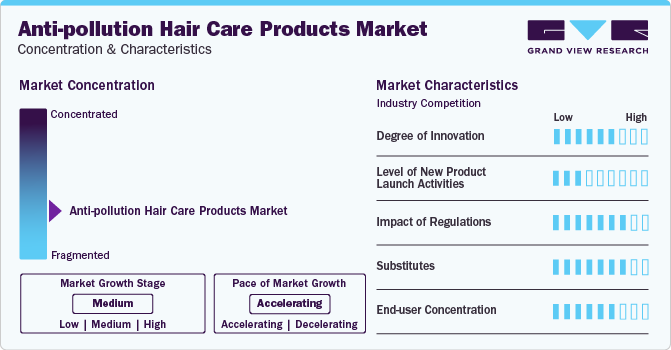
Regulations play a significant role in shaping the market, influencing both formulation and marketing practices. Stringent regulatory standards regarding ingredient safety, environmental sustainability, and product efficacy contribute to the development of high-quality and eco-friendly formulations. Additionally, labeling requirements and transparency regulations impact how manufacturers communicate the anti-pollution benefits of their products to consumers.
The end-user concentration in the market is diverse. This market caters to individuals residing in urban areas facing higher pollution levels, professionals seeking preventative hair care solutions, and consumers with a growing emphasis on personal grooming and overall well-being. The wide-ranging appeal of anti-pollution hair care products indicates a market with a dispersed and expanding customer base, driven by a shared concern for protecting hair from environmental damage.
Report Coverage & Deliverables
- Competitive benchmarking
- Historical data & forecasts
- Company revenue shares
- Regional opportunities
- Latest trends & dynamics

Product Insights
The anti-pollution shampoo segment accounted for a revenue share of 38.61% in 2023. Shampoos are an essential part of the personal care routine. The rising demand for shampoos is attributed to the increasing prevalence of hair-related problems. Environmental challenges such as rising pollution, which is harmful to hair and scalp health, are also bolstering segment growth. As a result, key manufacturers are innovating their product offerings to meet the consumer demand. For instance, BASF has Chom Chom Shampoo that contains Rambuvital, a seed extract from the Rambutan fruits. This ingredient offers anti-pollution efficiency to hair and scalp.
The demand for anti-pollution conditioners is expected to grow at a CAGR of 8.4% from 2024 to 2030. Conditioner enhances the shine and texture of hair. It is a moisturizing agent used after shampoo to replenish lost moisture and soften hair fiber. Consumers associate shiny and silky hair with a healthy scalp, which drives the demand for conditioners including anti-pollution hair conditioners. Moreover, busy lifestyles have increased demand for products that offer quick and easy hair and hygiene management. Natural or organic hair conditioners are also gaining attraction among consumers.
End-user Insights
The demand among women accounted for a market share of over 62% in 2023. The increasing consciousness among women about appearance, especially hair health, is driving the demand for hair care products, particularly anti-pollution formulations. Women show significant emphasis on maintaining aesthetic appeal but overall well-being and recognize the harmful effects of environmental pollution on hair quality. This awareness fuels the demand for specialized products designed to respond to the impact of pollutants, reflecting a proactive approach to preserving and enhancing hair health, likely favoring the demand among the women population.
Anti-pollution Hair Care Products Market Report Scope
| Report Attribute | Details |
| Market size value in 2024 | USD 4.52 billion |
| Revenue forecast in 2030 | USD 6.75 billion |
| Growth rate | CAGR of 6.9% from 2024 to 2030 |
| Actuals | 2018 – 2023 |
| Forecast period | 2024 – 2030 |
| Quantitative units | Revenue in USD billion and CAGR from 2024 to 2030 |
| Report coverage | Revenue forecast, company ranking, competitive landscape, growth factors, and trends |
| Segments covered | Product, end-user, distribution channel, region |
| Regional scope | North America; Europe; Asia Pacific; Central & South America; Middle East & Africa |
| Country scope | U.S.; Canada; Mexico; UK; Germany; France; Italy; Spain; China; India; Japan; South Korea; Australia; Brazil; South Africa |
| Key companies profiled | L’Oreal S.A.; Beiersdorf AG; Shiseido Company; Unilever; Kao Corporation; CLR Berlin; Procter & Gamble; Coty, Inc.; De Lorenzo; Avon Products Inc. |
| Customization scope | Free report customization (equivalent up to 8 analysts working days) with purchase. Addition or alteration to country, regional & segment scope. |
| Pricing and purchase options | Avail customized purchase options to meet your exact research needs. Explore purchase options |
- Product Outlook (Revenue, USD Billion, 2018 – 2030)
- Shampoo
- Conditioners
- Oils
- Serums & Masks
- Others
- End-user Outlook (Revenue, USD Billion, 2018 – 2030)
- Men
- Women
- Distribution Channel Outlook (Revenue, USD Billion, 2018 – 2030)
- Hypermarkets & Supermarkets
- Pharmacy & Drug Stores
- Specialty Stores
- Online
- Others
- Regional Outlook (Revenue, USD Billion, 2018 – 2030)
- North America
- U.S.
- Canada
- Mexico
- Europe
- UK
- Germany
- France
- Spain
- Italy
- Asia Pacific
- China
- India
- Japan
- South Korea
- Australia
- Central & South America
- Brazil
- Middle East & Africa
- South Africa
- North America
Recent Developments
- In September 2023, Beiersdorf AG launched a new production center in Leipzig with an investment of around USD 324 million. The new plant meets environmental and sustainability standards along with the incorporation of automation and extensive digitalization across all levels of production.
- In October 2023, Procter & Gamble launched haircare microsite #HairDNA, to solve consumer queries via expert advice from the leading brands, on Southeast Asia’s e-commerce platform Lazada. #HairDNA on Lazada will act as a one-stop shop for consumers seeking to switch hair care routines and find new products on a single platform.
This report forecasts revenue growth at the global, regional, and country levels and provides an analysis of the latest industry trends and opportunities in each of the sub-segments from 2018 to 2030. For this study, Grand View Research has segmented the global anti-pollution hair care products market report based on product, end-user, distribution channel, and region:
Frequently Asked Questions
Choose License Type
